Saturday, 22 April 2017

Masters thesis writing tips

10 top tips for getting your Master's thesis done


1. POMODORO TECHNIQUE
Using the tomato timer definitely helped me break my writing up into manageable chunks and kept me from looking at my phone and getting distracted by Instagram, Facebook, Twitter and Snapchat.

Each work session lasts 25 minutes on the tomato timer which is apparently the optimum work time before concentration begins to decline. Give it a go here!

By using the pomodoro technique I limited my time on social media to the 5 minute breaks scheduled into the tomato timer. But you could take it a step further and only limit your time on social media twice a day or something like that so that you don't get stuck in the procrastination pit.


2. BE ORIGINAL
Add your own twist to your research and your own original ideas. A thesis is always made tonnes better if the reader can see what ideas and techniques you have brought to your research. It doesn't have to be perfect though! It's okay if the idea didn't work at first, sometimes the best discoveries are the ones where the science didn't go as predicted!

In the MAGPIE (machine I worked on for my masters project) control room with my funky interferograms :)


3. GIVE YOURSELF SMALL ACHIEVABLE GOALS EACH DAY
It's so much easier to motivate yourself to write your thesis if you give yourself small achievable goals everyday which is a lot easier to do then giving yourself a broad goal like 'finish thesis' which can be rather intimidating and can quickly cause your motivation to drop to rock bottom.

Every night before I go to bed I like to plan the next day and give myself a few small goals to try and achieve during the day. I normally write this on a post-it note or in my diary and tick it off when I've achieved the goal. This way you have a goal-reward system that makes you feel like you are progressing and will definitely help with motivating you to keep going. There's nothing worse then feeling like you're not getting anywhere. 

4. TREAT YO' SELF 
Every time you tick off a task from your list give yourself a reward! You deserve it! Writing a thesis is no easy task and can take a toll on your motivation. Give yourself some chocolate, or go to the park for a walk, or play a bit of piano or sing or whatever your favourite thing is to do just do it and don't feel guilty about it!


In the Blyth Centre at Imperial College, releasing some thesis stress whilst singing and remembering how to play the piano!


I normally try to keep evenings free for relaxing so that I don't go to sleep with worries about my thesis and that my mind is chilled and can get a decent night's rest for work the next day. This way iIcan feel fresh the next day and motivation levels are kept high.

Also, try working in different locations. I recently worked in a coffee shop outdoors in the middle of Soho whilst it was quite sunny and warm - having a new environment and being outdoors in the sun definitely increased my productivity! There were buskers (singers, breakdancers and beatboxers) on the road which definitely spiced up my thesis writing - try it out!


Enjoying a frappe whilst I work! #BrainJuice


5. MAKE SURE TO MEET THE GUIDELINES
Normally when you're writing a thesis there are guidelines you have to meet, whether that may be a word limit, formatting style or document type you need to keep to the guidelines or you might be penalised. So definitely check the guidelines out before you submit!


6. REMEMBER WHY YOU'RE DOING THIS
You're doing this because you've done some amazing work and the world needs to know about it! Each time you feel like giving up or your motivation levels are dropping just remember that no one in the world has done the exact same research as you, your work is unique and you have found out just that little bit more of science to add to the huge body of science in order to advance it. Your thesis is one of the ways we can know about your cool research! 


7. GET FEEDBACK AND HAVE A BUDDY
Find someone, whether that'd be someone in your research group, a friend, or partner, to support you through your thesis writing stage. Maybe they'll be willing to read chapters of your thesis, or just make sure you are taking breaks and getting some fresh air! Whatever it may be find that support and it'll help massively in your thesis writing journey. Also, finding support through postdocs or others that have already written a thesis will be super helpful, they'll be able to give you the best insider tips to help you get that thesis done! Also, you'll quickly find out that all the things you are struggling with at the moment have been things previous PhD students have experienced to so you won't feel alone. We're all in this together! :)


8. REMEMBER THE 5 W's
For pretty much all your sections in your thesis, where the main sections are the abstract, introduction, background and theory, experimental results and discussion, conclusion and further work, think about the 5 W's: what, where, when, why and who. What was the work carried out, where was it done, when was it done, why was it done and who by?


9. LEAVE FORMATTING, ABSTRACT + CONCLUSION TIL THE END
Once you've written your first draft of your thesis you can then have a clear idea of what you've achieved, the key values measured and the main outcomes of your research which will make writing your conclusion and abstract a lot quicker! 


10. DO YOUR RESEARCH
It's useful to have done a literature review prior to writing your thesis. Being able to know what other researchers in the field have done and haven't done is very useful and will be able to help you judge where your research fits into the field. Knowing all the main sources before writing your thesis will making citing and referencing things in your thesis a LOT easier!


Reading laboratory astrophysics related papers so I can be up-to-date with the field when I write my thesis
-----------------------------------------------------

That's all from me for this post but do please let me know if these tips have helped you out by commenting below. This post was inspired by the fact that I am currently writing my master's thesis and these were the main things I struggled with and I wanted to share them so that I could help someone else out there that's writing their thesis. I wish you all the very best with your write-up and remember you're awesome, you CAN do this and just think about the feeling you'll get when you've submitted it!

Sunday, 5 February 2017

Imperial Interview Tips

This blog post is all about Imperial interviews and has come about because of a surge of emails in my inbox asking me about how to ace an interview at Imperial College. These tips are from my personal experience and could vary from university to university but I hope it helps. 

So generally, physics interviews are structured into three parts (in my experience). The first part consists of questions like Why physics? Why imperial (or other university)? What makes you want to do a physics degree and what inspired you? and similar types of questions. 

The second half consists of maths questions, so for me, I was asked to draw graphs like y = e^(cosx) as an example from my Imperial interview. Make sure you are familiar with all of AS and a bit of A2 maths. Learn how to draw composite function graphs - this will help you massively in interviews. 

The third part consists of physics questions. So this is mainly based on what you have written in your personal statement. In my personal statement, I wrote about medical physics and how much I enjoyed this field of physics. Consequently, I was asked questions about radioactive decay and I had to state a few equations and draw some graphs related to this. But other interviewers may ask you a general/unrelated question like how many water molecules are in a glass of water and you have to show them your train of thought. So you’d start off with something like the size of an average atom is 10^-10m and then from here work out the size of a water molecule, the volume of a water molecule assuming each atom is spherical and then the volume of the water in the glass, account for spaces between molecules and then from here you can work out how many water molecules are in the glass of water. For this I would say google something like ‘common university interview questions for physics’ and there should be questions out there you can work through.

The Thinking Physics book by Epstein is perfect for interviews because you need to think in the same way the book thinks. I would say the best way you can prepare for interviews is by revising everything you’ve learnt in AS and as much as you’ve learnt in A2. If the interviewer asks you about a topic you haven’t learnt yet don’t be shy to say to them that you haven’t learnt it yet (I had to do this in one of my interviews). Also, if you don’t know how to answer a question it is totally okay (I couldn’t answer most of the questions they asked me!). The most important thing is that you show them your trail of thoughts. For instance, for the maths equation I mentioned above, you would say something like: an e^x graph looks like this and a cos(x) graph looks like this. For small x, the cos(x) graph is more dominant and then for large x the e^x graph becomes more dominant.

Additionally, read at least two physics articles on recent/exciting research currently being carried out and use this in the interview to show that you’ve read into the field and you are up to date with what’s going on.

To be honest the interview is just there to see if you are who you say you are in your personal statement. The main thing to do is to just be enthusiastic and show your passion for the subject. Ask your interviewer about their work/research at the end of the interview to show that you are interested in what they do. They will love that! :)

To prepare for my interview I googled standard interview questions for Physics, I looked on the Oxford or Cambridge (can’t remember, I think it was Oxford - it’s been four/five years since my interview!) website for interview videos. These showed what a typical interview would be for different subjects - it helped me a lot!

I also went through all the content I learned in AS Physics and Maths as well as reading a bit ahead in A2 Physics and Maths so that I went into the interview knowing as much as possible. 

Don’t be nervous though, I messed up my Imperial interview and came out crying but still got the offer so no need to be nervous. Like I said, they’re only seeing if you are human and if you are who you say you are in your personal statement.


Make sure you know your personal statement inside out - if you mention a particular topic in your personal statement then they may ask you about this topic in the interview so be prepared! 

I think that's everything, I hope you've found this useful!

Good luck for your interviews guys and girls! I'm sure you'll do great! Believe in yourself and you'll be fine! :)

Saturday, 4 February 2017

Diverse @ Imperial

Tuesday, 6th December 2016
I didn't expect that what happened today would happen. I was just going about my normal undergraduate business when I got a message from one of the PhD students in the plasma physics group (almost-Dr Hazel Lowe) about having a photoshoot for the Diverse@Imperial project. For those of you that know me, you know that I cannot resist a lab photoshoot, so... of course I said yes! 


But what is Diverse@Imperial I hear you ask?

Diverse@Imperial is a week where Imperial showcases and shows recognition for its diverse (including all backgrounds, ages, disabilities..etc) and talented students and staff. They hope to not only bring awareness to the diversity of Imperial's staff and students but also to inspire others and maybe even allow them to discover role models at Imperial.


Friday, 9th December 2016

I received an email with some of the shots they had taken and I was able to choose which one I thought looked best so that they could display it on flyers, posters and social media related to the Diverse@Imperial project. It was so hard to choose! Or maybe it's because I'm super picky about photos! :p


Here are some photos from the photoshoot, some were taken in the lab I work in for my MSci project, which is called MAGPIE:


Photo courtesy of Imperial College Communications


Photo courtesy of Imperial College Communications.

Photo courtesy of Imperial College Communications.

Photo courtesy of Imperial College Communications.

Photo courtesy of Imperial College Communications.

Photo courtesy of Imperial College Communications.


Photo courtesy of Imperial College Communications.


Photo courtesy of Imperial College Communications.


- Diverse@Imperial week exhibition -


Monday, 31st January - Friday, 3rd February 2017


It was just unreal to see a huge picture of me in the main entrance of Imperial College - felt so honoured to be part of this special week at Imperial that showcases the diversity of its staff and students. Hopefully sharing stories like this will inspire others or at least show others that Imperial staff and students are just like you or me. 

Here's my poster for the exhibition:

Me and giant me.
My story
Photo courtesy of Twitter
Photo courtesy of Imperial College Communications

Check out the link to my story on the Imperial College website here.


Also, just wanted to shout out to Hazel Lowe for allowing me to take part in Diverse@Imperial week - here's her poster and story.


Hazel Lowe, PhD student, Plasma Physics Group, Imperial College.
Photo courtesy of Imperial College Communications.

Hazel and her story. Photo courtesy of Imperial College Communications.

Friday, 20 January 2017

Soho Radio

January 14th, 2017
I can't believe I'm saying this but I've just been on the radio for my first ever radio interview with Soho Radio! I was invited to the Science Mixtape show which airs every Saturday at 10am and lasts for an hour. It aims to find out more about the science and musical taste of an expert guest. So, I not only got to talk about fusion, MAGPIE (the experiment I am working on) and women in physics but also got to choose 6 of my favourite songs to air on the radio! 

Song list (for anyone that wanted to know):
Kygo ft. Maty Noyes - Stay
Ed Sheeran - Shape Of You
Sean Paul ft. Dua Lipa - No Lie
Nicky Jam - Hasta El Emanecer
Ne-Yo - Closer
Christopher & Matoma - Take Me Back

So I woke up this morning at 5 am, brought my notepad with me with all my notes and made my way to uni - probably the earliest I've been into uni ever! I went down to the lab to get my demo, a baloon-popping-laser called the POP-O-MATIC, all ready for the show! I got into an Uber with the Pop-O-Matic (obviously got weird looks from the driver as I was carrying this huge and probably suspicious science equipment) and made my way to Soho Radio HQ. When I walked into the studio the first thing I noticed was the amazing cacti collection near the front of the room - it was pretty epic! 

Kyle Major, one of the presenters of Science Mixtape, was waiting for me in the studio which was full of radio equipment - microphones, headphones and all! I started to set up the Pop-O-Matic and almost immediately I found out that it wasn't working - I was so disappointed! I had checked it before I left university and it was working fine so I guess it must of got knocked in transit - what a shame! It's such a cool demo and I really wanted it to work but I suppose that is the nature of science - sometimes your experiments just don't do what you want them to do. Oh well :(

After that, I went through a sound check, put my radio headphones on (where I could hear my own voice - weird!) and before I knew it we were LIVE ON AIR!!!! I was so nervous! All I could think about was that my friends and family were all listening in. This was my first time on the radio so I didn't really know what to expect and I didn't want to mess up. 

The hour flew by and in no time at all it was over. We touched upon so many different topics and we even squeezed in some recent science articles too. During the song breaks I was trying so hard not to laugh because I was finding it so hard to believe that I was actually on the radio! All in all, it was great fun and I loved it SO much - so much so that I wanted to do it all over again!

You can check out some of my live videos from the day on Facebook and Twitter. 


Here are some pictures from the day:


Pop-O-Matic (balloon-popping laser demo)

Soho Radio HQ/Studios

Pre-radio interview nerves showing through here (Photo courtesy of Yasmin, Soho Radio)

Mid-radio interview vibes (Photo courtesy of Yasmin, Soho Radio)

Post-radio interview smiles - that's a wrap!

Soho Radio (loving the neon lights - that's a plasma!)

Check out the Soho Radio Instagram page and Facebook page for a video of my failed demo :( 

Check out the video below of the Pop-O-Matic in action and how it should have worked on the radio show:


You can check out the podcast version of the show online here and here. Hope you enjoy it! :)


-----------------------------------------------------------------------------
I'd like to thank Luke Robert Mason for introducing me to Matilda Hay, Science Mixtape presenter, and making my time on Soho Radio a reality. A huge thank you to Kyle Major and Yasmin for making me feel relaxed during the show! Thanks Soho Radio for having me - I'd love to do it again!

Wednesday, 28 December 2016

EUROFusion

May 2016 
Back in May of this year I was found on Twitter by Anne Purschwitz, a journalist for EUROFusion. She was looking for young people that were interested in fusion and science communication and since I was passionate about both, she thought I was the perfect person! She needed young scientists for a new project EUROFusion was carrying out, which involved making an issue of the Fusion in Europe magazine entirely written by young scientists. This was a hard challenge since she had to find young scientists that were willing to give up their time to do this, that were interested in fusion and you had a bit of experience in science writing - it was tough but she managed to find 14 students from all across Europe!


Summer 2016
That summer I became a Young Face of Fusion for EUROFusion and was featured on the EUROFusion website - check out the article here. I was so honoured to become a young face of fusion for EUROFusion and even more honoured to be able to share my story and my passion for physics.


September 2016

When I came back from my placement at SLAC, check out blog posts here, here, here and here, I was contacted by Anne about an incredible opportunity relating to my new role as young fusion writer for EUROFusion. The opportunity she told me about was so incredible that I just couldn't believe that this was happening to be --- Anne gave me a unique chance/task to interview the new CEO of the UK Atomic Energy Authority, Prof. Ian Chapman!!!! But the exciting news didn't stop there .. Anne was allowing me to interview Prof. Chapman at the JET HQ!!!!!!! So I was going to visit the Culham Centre for Fusion Energy, meet Prof. Chapman and have a personal tour around JET!!!!!!!! I just couldn't believe it! This was such excellent news and I was absolutely thrilled to visit JET, the largest tokamak in the world!!!! (I almost fainted!)


Check out my tour around JET in the following video - hope you enjoy it! :)


I was given a hard hat before I went inside the huuuuuuugggeee room that JET lived in. I honestly couldn't keep my jaw from dropping each time I looked up to see this huge machine surrounded by wires, lots of metal, coils, and pipes. It was awesome!


After my tour around JET, it was time for me to meet Prof. Chapman! I was so excited to meet him because at the young age of 34 he is one of the youngest CEO's of a major research centre and I was inspired by his story not only because of this but also because he did his PhD in the same group that I am doing my MSci in at Imperial!


This was my first time interviewing someone (I'm more used to being interviewed) so it was nice to have the tables turned. I set up my camera and had my questions ready. All in all the interview took about 15 minutes and it was great to hear Chapman's answers.

Professor Ian Chapman and I


After this, I was on my way home to write up my article for the next issue of Fusion in Europe. Once this was done I sent it off to Anne where it underwent a quick editing process and was all glammed up in final PDF form for the magazine. I couldn't wait to see the magazine with my article in! 


October 2016
By October the finished article was published and the Fusion in Europe magazine (with my face on the front cover!) was shipped around the globe for fusion scientists, enthusiasts and others to read!

Can't believe I'm on the front cover!

Lots of copies of the Fusion in Europe magazine being shipped around the world!


This was super exciting! It was great to read the articles of the other students involved and the magazine had a great young and fun vibe about it. You can check out my article and the video interview with Prof. Chapman here.


---------------------------


You too can visit the Culham Centre for Fusion Energy and even study/work there - check out this link for more info!


I'd like to finish this blog with a few words from me:
No matter what life throws at you always, always follow your heart and work hard for your dreams, because maybe, just maybe your dreams will come true and all those long hours of hard work will pay off! Believe in yourself and anything is possible! I believe in you!

Sunday, 4 December 2016

My last few weeks at SLAC

. . . The last few weeks at SLAC . . .

I've been meaning to write this blog post for a while and have only just got the chance to write it. It's been a hectic few months as I've transitioned into my last year of my MSci Physics degree at Imperial College. And I can't believe I have gotten this far! But anyway, more info about my AMAZING MSci project will be up in my next blog post .. so watch this space! :)

But for now let's go back to a few months ago, when I was completing my internship at SLAC!

The final few weeks at SLAC were jam-packed with lots of science! And I certainly didn't want to leave! I was having the BEST TIME EVER!!

Just as a quick reminder, my project at SLAC focussed heavily on the construction of a laser system that will form part of the development stage of the new upgrade to the Linac Coherent Light Source (LCLS) known as LCLS II. Not only did I get the chance to work on this SPECTACULAR laser system but I also got to name it!! Because this laser system is extremely powerful and can start a fire I named it IGNIS which is the Latin word for fire.

IGNIS
For the laser scientists + general science fans out there here's the spec for IGNIS:

Average power: 100 W
Wavelengths: 800 nm (+ 1500 nm)
Pulse duration: 15 fs
Pulse energy: ~1 mJ
100 kHz
OPCPA laser system

What's special about IGNIS?
IGNIS is a rare type of laser system because it's a HIGH REPETITION RATE, HIGH PULSE ENERGY and HIGH AVERAGE POWER laser system. All these qualities are rarely seen in a single laser system so I was very fortunate to work on it.

Whilst I was there, I was building the laser enclosure for IGNIS and helping to move equipment from the old lab into the new lab. I also did a bit of plumbing too which was definitely a new skill I learnt! 

The completed enclosure for IGNIS

Shiny new laser enclosure for IGNIS

Huge spanner for some plumbing for the cooling system for IGNIS


The Herriott Cell
The most exciting part though, was when I got to work with a Herriott cell. A Herriott cell consists of two spherical, concave mirrors where one of the mirrors has an off-axis hole - the mirrors I was using were made of gold! So they were super expensive! Laser light enters through the hole and bounces between the two mirrors multiple times and then exits via the same hole under what is known as the RE-ENTRANT CONDITION. This condition states that the number of passes the light makes in the system multiplied by the angle between successive reflections is equal to a whole number multiple of 2Ï€ (360 °). For you maths fans out there we can describe this in the form of an equation:

Nθ = 2MÏ€,

where N is a whole number (integer) and is related to the number of passes the light makes in the system,  Î¸ is the angle between successive reflections and M is a whole number.


What's the point of a Herriott cell?
A Herriot cell allows light to bounce back and forth between the mirrors many times which means that when the light enters it will be a while til it comes out again, or at least a while in light timescales! So when a Herriott cell is added to a laser system it introduces what we call an optical time delay. Say, we have a pulse of light that enters the Herriott cell and a pulse of light that doesn't go through the cell we will see that the pulse of light from the Herriott cell arrives later than the pulse that didn't go through the cell. This is helpful in laser systems when you want two pulses of light from different paths to arrive at the same time. We can adjust the distance between the mirrors of the Herriott cell, the angle of the incident laser beam (and the diameter of the mirror) in order to adjust the optical time delay and make sure the pulses arrive together at the same time. This is exactly the reason why I was testing out the Herriott cell, I wanted to know if it could offer the optical time delay required in the IGNIS laser system ... and I found that it could! So the Herriott cell will be making up part of IGNIS! :)
The gold mirrors for the Herriott cell


The laser bounces multiple times between the mirrors along an ellipse on the mirror


Poster session
In the last week of my time at SLAC I was able to showcase my work at an intern poster session, where the Director of LCLS, Mike Dunne, would judge our posters and offer prizes for the best one. It was great to meet the other interns and see what cool stuff they were working on. I also got to meet Mike Dunne, who was the first person I spoke to at Imperial College about doing an internship at SLAC and so it was great to met him in America where he could see all the cool things I was up to.

Poster session fun! :)

My poster and video at the intern poster session


Photoshoot
Those of you that know me, know that I cannot complete an internship without having a lab photoshoot at the end of it! So here are some pics from all over SLAC! (Yes, I did take a tour around the whole of SLAC (which is HUGE) just for the photoshoot ... what can I say, I love a good photoshoot *smirks*)

Outside the LCLS Office building

I got to see the LINAC at SLAC - it was sooo cool! The tunnel looked like it went on forever!

A bit of weekend working in the Cali sun (Visitor's Building at SLAC)
LINAC


LINAC

I got to visit some of the experimental hutches at LCLS - they were awesome!
Just outside the Far Experimental Hall of LCLS 
American trucks are HUGE!


Outside the Far Experimental Hall, LCLS
  
I LOVE all the colour matching at LCLS!

The X-ray Correlation Spectroscopy hutch at LCLS
Coherent X-ray Imaging hutch at LCLS


Coherent X-ray Imaging hutch at LCLS - the pipe that runs through the room is the x-ray beam
Matter in Extreme Conditions hutch at LCLS


Matter in Extreme Conditions hutch at LCLS
 
Matter in Extreme Conditions hutch at LCLS


Electric truck at SLAC - cute!

 
The Californian sky is so beautiful!

XRT, LCLS


First international intern at SLAC!
As if it wasn't a blessing enough to be able to work at LCLS at SLAC, it was even more of a blessing to find out that I was the first ever international intern at SLAC ever! I couldn't believe that I was the first one! And not only that, recently at university I've been hearing about how I've paved the way for other undergrads at my uni to go over to SLAC and they've come up to me for advice and I cannot wait to see them venture out to SLAC and have the time of their lives just like I did! I cannot describe how honoured I feel to have paved the way for other undergrads to follow in my footsteps and carry out an internship at SLAC! Hopefully many more can have the amazing experience I had when I was out there! :)

Because I was the first international intern at SLAC I was asked to be featured on the SLAC website and of course I said yes! I was interviewed by Michael Ross about my time at SLAC, how I got the internship and what my future plans were. The article was accompanied by a photoshoot (yay! :) ) by Chris Smith. Check out the article here.


Me and my Herriott cell


AFTER WORK IT'S TIME FOR A BIT OF FUN . . . 
Here are some cool things I got up to in my final weeks in California:

French toast! Mmmmm...

Looking out for whales and baby seals

Beautiful scenery in California - just breathtaking!

Ford GT40 at SLAC Car Show

SLAC Car Show

SLAC Car Show

SLAC Car Show

SLAC Car Show

Stanford Dish

Stanford Dish

The view from the top of the Stanford Dish trail - you can see San Francisco!

Stanford Dish Trail

Five-star Rosewood Sand Hill Hotel - it was lush!


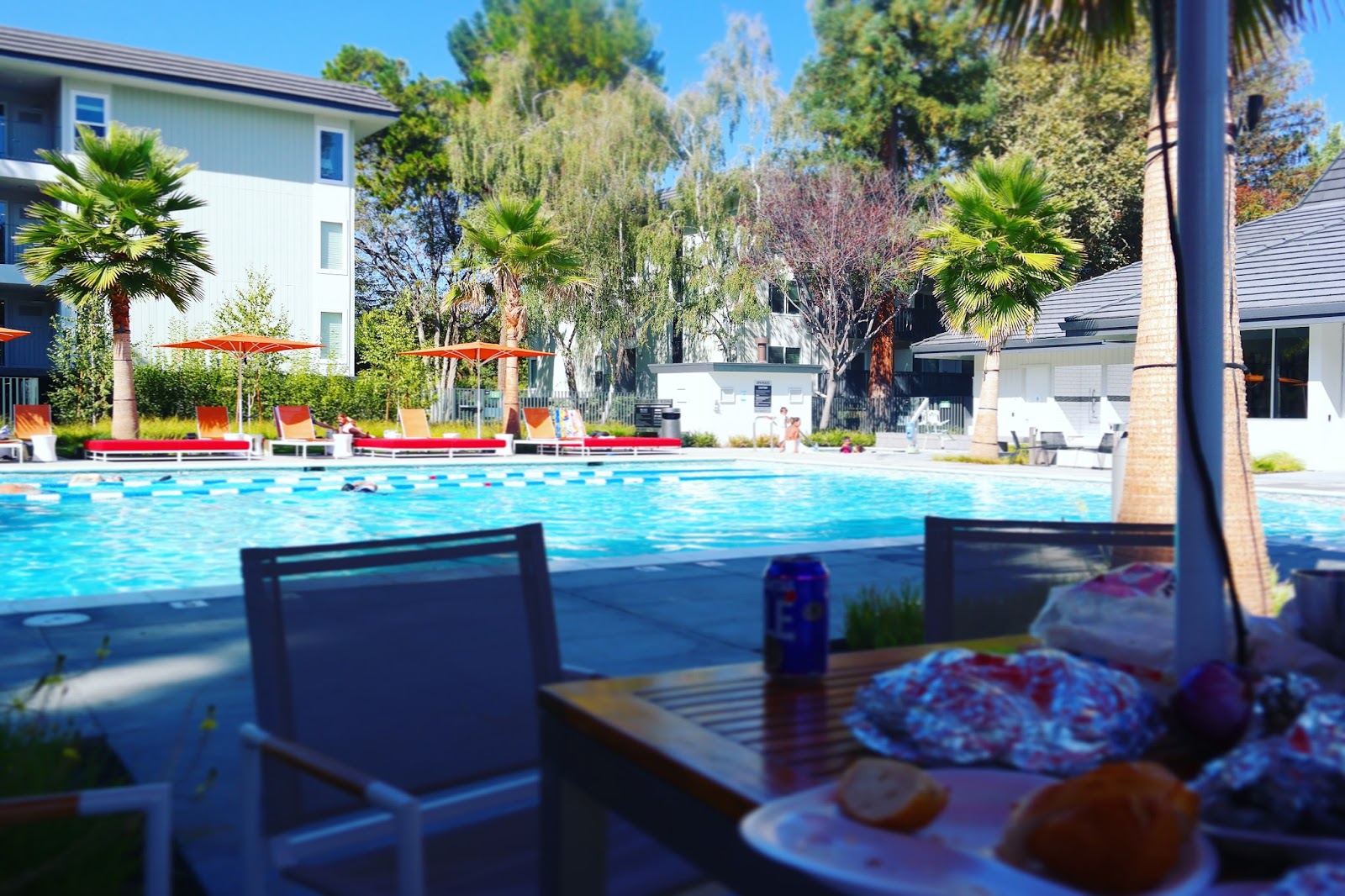
Poolside BBQ

Poolside BBQ

Monster Truck at Sonoma County Fair - probably the most American thing I did out there!

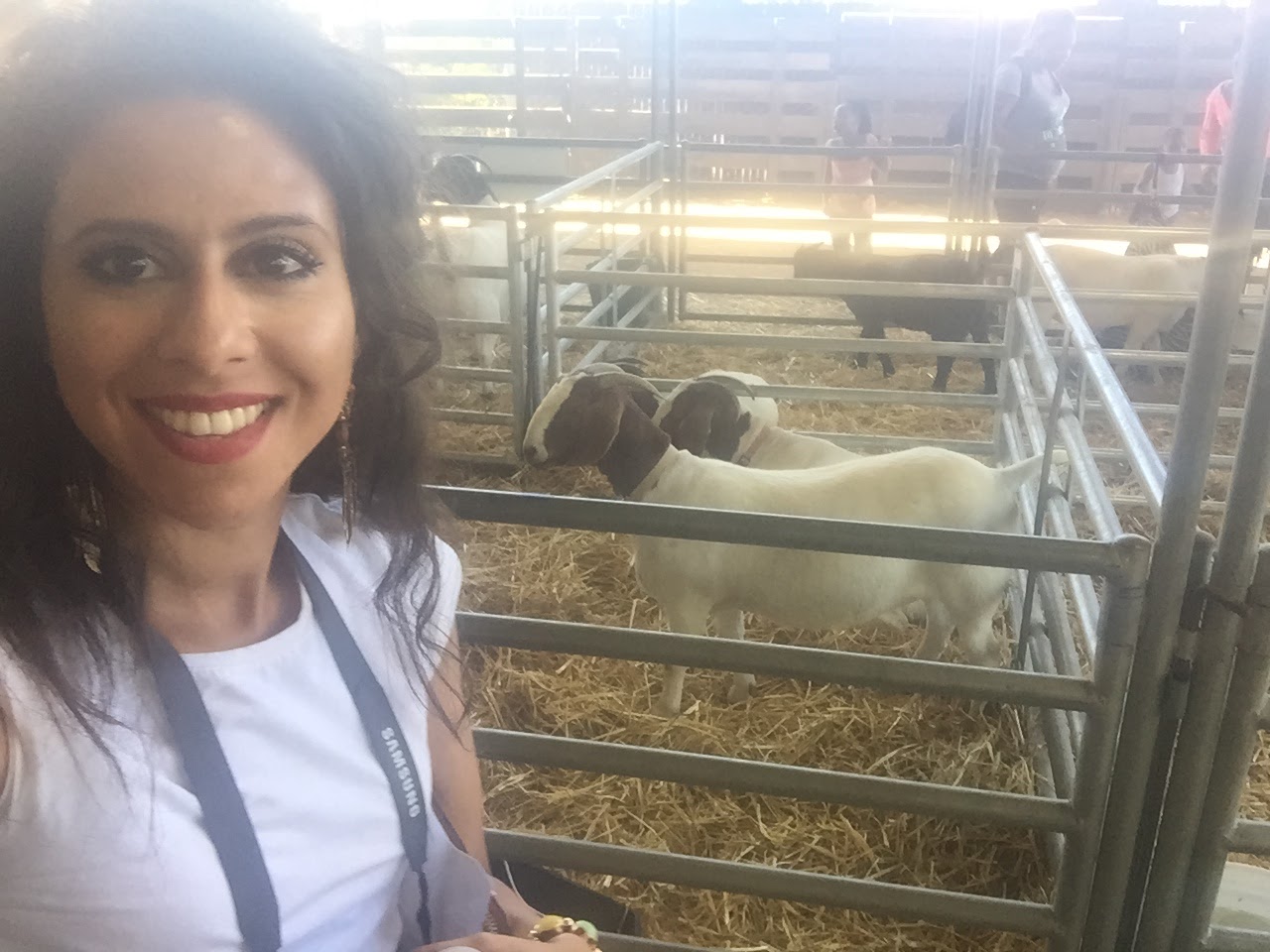
I got to see cute animals at the Sonoma County Fair too!

Butterfly House at Sonoma County Fair

Got to participate in the Escape Room which was a cool game that we played where we had to escape out of a room in half an hour and we did it with 10 seconds to spare! Woop! Woop!


My last (full) day in California ended with a BEAUTIFUL sunset - just perfection

Got to unleash my adventurous side with a bit of go-karting on my last day.


. . . Final words . . .
Overall, the internship at SLAC was the BEST experience I have had to date! It was an incredible opportunity and I cannot honestly believe that I was able to do this and work at this AMAZING national facility that is home to the largest linear accelerator in the world! Just. UNBELIEVABLE.

I learnt SO much, met incredible people and had my first experience away from home and it was my first time in America too! So all in all, it was FANTABULOUS! Cannot even put into words how amazing this opportunity was and I want to say a huge thank you to all those that helped me get to SLAC and have this amazing opportunity. Thank you very much Mike Dunne, Alan Fry, Joe Robinson and Katalin Mecseki and Franz Tavella for making my internship at SLAC possible.
A huge thank you goes to all those that made my time at SLAC and California the best thing ever: Sid Patankar, Maegan Gonzales, Riccardo Veraldi, Ernesto Paiser, Omar Quijano, Matthew Windeler, Israt Alam.


If there is one thing I've learnt from this trip is that your dreams can never be too big, never give up and always fight for what makes your heart sing.

Believe in yourself and anything can happen! I believe in you!